

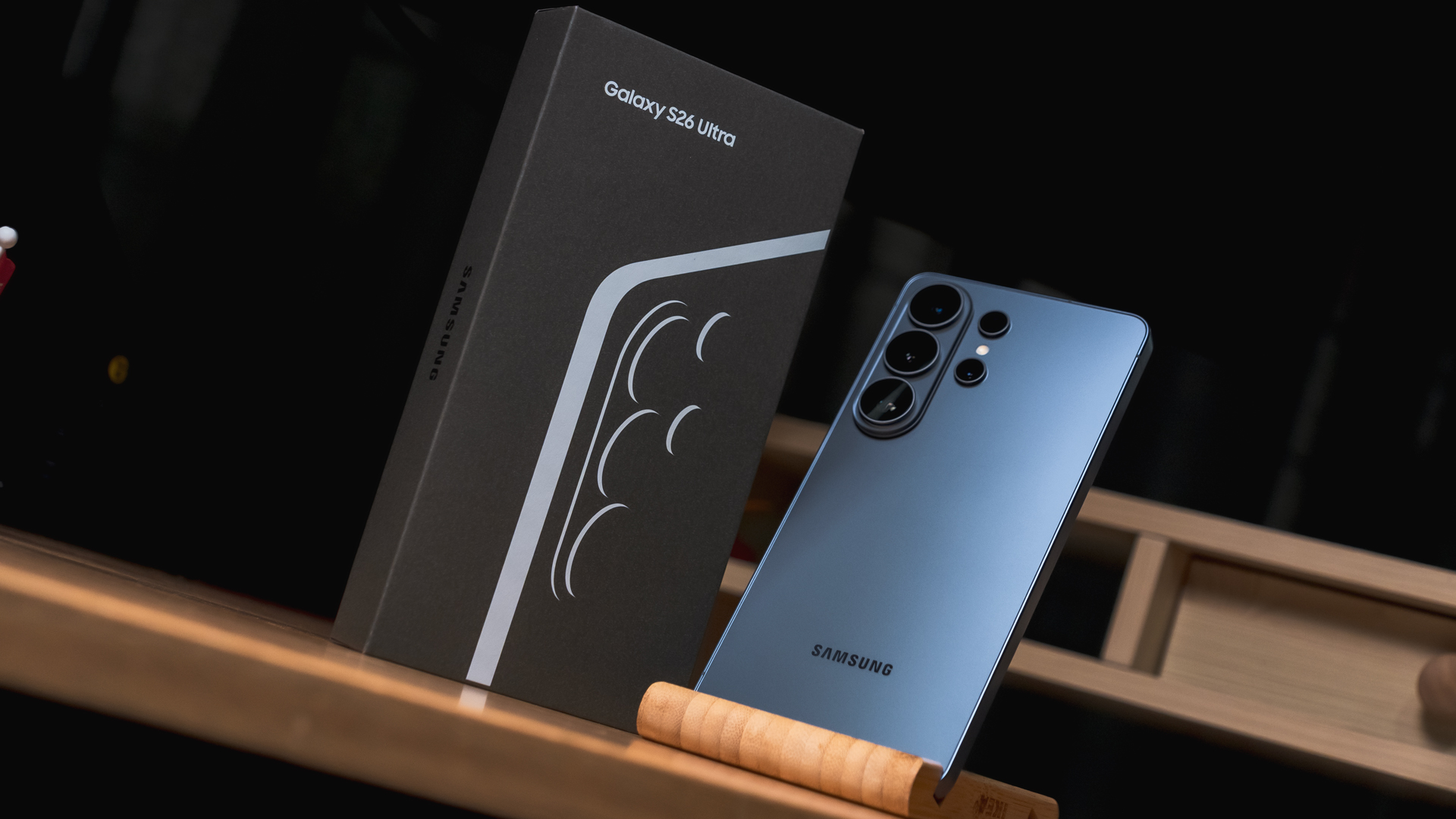
Samsung has got all their guns blaring for the year 2026. Starting it off with the release of Samsung Galaxy S26 Ultra. The device pushes premium innovation even further, blending top tier performance with precision crafted design. Featuring a professional grade camera system, stunning Dynamic AMOLED visuals, advanced Galaxy AI, and battery life built to keep up. For Samsung, it’s more than just a smartphone, it’s Samsung’s most powerful Ultra device yet. Let’s head right into the review and look at the first segment of unboxing the device.

Specifications
| Dimensions | 163.6 x 78.1 x 7.9 mm (6.44 x 3.07 x 0.31 in) |
| Weight | 214 g |
| Display Type | Dynamic LTPO AMOLED 2X |
| Display Size | 6.9 inches |
| OS | Android 16, up to 7 major Android upgrades, One UI 8.5 |
| Chipset | Qualcomm SM8850-1-AD Snapdragon 8 Elite Gen 5 |
| Memory | 256GB 12GB RAM, 512GB 12GB RAM, 1TB 16GB RAM |
| Rear Camera | 200 MP, f/1.4, 23mm (wide), 1/1.3″, 0.6µm, multi-directional PDAF, OIS
10 MP, f/2.4, 67mm (telephoto), 1/3.94″, 1.0µm, PDAF, OIS, 3x optical zoom 50 MP, f/2.9, 111mm (periscope telephoto), 1/2.52″, 0.7µm, PDAF, OIS, 5x optical zoom 50 MP, f/1.9, 120˚ (ultrawide), 1/2.5″, 0.7µm, dual pixel PDAF, Super Steady video |
| Front Camera | 12 MP, f/2.2, 23mm (wide), 1/3.2″, 1.12µm, dual pixel PDAF |
| Speakers | Stereo Speakers |
| Battery Type | Li-Ion 5000 mAh |
| Charging Speed | 60W wired, PD3.0, 75% in 30 min
25W wireless (Qi2.2) 4.5W reverse wireless |
Packaging Content
Samsung had sent us the 256GB, Cobalt Violet variant, which is seen as the key hero marketing colorway. The device comes in a very modest offering. You get the device, paper works and USB C to USB C cable. This is very typical of a big manufacturer, skimping out on contents and just getting to the bare necessary. I would have loved it, if Samsung had included a screen protector and silicone casing the least. Factoring the price of the device, I am sure the cost of manufacturing or including these two essentials would not have been a huge hit on the cost of production.

Design
The S26 Ultra, comes with a 6.9″, 1440 x 3120 pixels Dynamic LTPO AMOLED display 2X. The display also ensures a 120Hz refresh rate, with HDR 10+. Adding on to those features is the display brightness of 2600 nits. The front glass is further reinforced and protected with the Corning Gorilla Armor 2. Which means, falls or drops wont really cause much of an issue as damage to the display is highly impossible.
The right side of the device is where you see a host of buttons. The volume rocker and the power button. Moving on to the bottom, you will find the S Pen, USB C connector, speaker grill(another one is the echo chamber at the top), and the dual sim card slot. Overall the device feels way more rounded than it’s predecessor the S25 Ultra. One thing to note here is that the all new S Pen is no longer a cube top, it’s slightly elongated and now requires you to slot it in back in its original shape unlike the previous generations where it was unilateral in shape.
The biggest difference in the design element would be the camera island. The camera island this time around is similar to the Z Fold 7. Which means its rather large and bumpy. Because of this, the device is unable to rest flat on its black and certainly wobbles every now and then when resting on its back. Adding on to the differences from previous generation is the material used, Samsung has rather downgraded the material to Aluminium from Titanium. Samsung claims aluminum’s elasticity helps absorb shock better. So that is that.


Performance
User Interface
The Galaxy S26 Ultra launches with One UI 8.5 from the get go. This is Samsung’s proprietary overlay which is based on Android 16. There isn’t much changes from the original One UI 8.0 introduced in mid-2025 alongside the Galaxy Z Fold7, but Samsung has clearly made some innovation to it. This time around it adds a handful of AI-powered features.
Key Changes on UI
- Bixby Improvements
- Perplexity AI
- Now Brief
- Now Nudge
- Circle to search
- Screenshot search
- Audio Eraser

Cameras
The camera department of the Samsung Galaxy S26 Ultra is where light work has been done to further fine tune the overall experience. The entirety of the setup has not been changed, but you do see a slight bump in the overall features. For one, the main sensor which has been used since the Galaxy S23 Ultra remains unchanged at being 200MP but now it sports a higher aperture point of F1.4 over its predecessor F1.7. It does however maintain the 23mm focal length that has been unique to this ISOCELL HP2 in house sensor. There are also a host of other changes in aperture profiles for the periscope telephoto sensor and the telephoto sensor is using one that was found in the Galaxy S22. Not much of innovation, but I’m sure Samsung knows what they’re doing. So let’s take a look at some images the device captures.


The shots above were shot on its expert raw profile. One thing I’d say is that the shots straight out of camera were lackluster. They appear to be whitewashed, and just does not have the spark. However, I genuinely enjoy the expert raw mode which gives me full control of the entirety of the camera modules. The color science in shooting Jpegs seriously needs a better update which I really hope Samsung looks into it. I have also uploaded the SOOC images below for anyone to compare against the edited raw ones.


As for videography, none of the changes standout on its own from previous models. Of note, there’s support for 10-bit HDR video recording, along with a Log profile that works in both Pro Video and the standard Video mode. New for this generation is a set of built in LUT presets, Standard, Blockbuster, Coming-of-age, Romance, and Thriller. While they add some creative flexibility, there’s still no option to load custom LUTs. Pro mode also brings more precise control over focus and exposure, supported by tools like zebras and false color monitoring, alongside live audio level meters.
Video stabilization is offered across every shooting mode and on all cameras, with the option to turn it off if you’re using external stabilization gear. The headline upgrade this year is Horizon Lock, a stabilization feature that keeps footage level even when the phone is rotated extensively around its horizontal axis. This is probably the biggest thing many out there are talking about, but I honestly don’t see it as a standout feature.
Verdict
The Samsung Galaxy S26 Ultra retails at RM5999(256GB), RM6799(512GB) and RM7999(1TB). Coming with a price tag of this magnitude, I would have loved to see a better camera setup for starters. Following that, I’d expect a more complete package in the sense of having a little extras given in the box, i.e casing, screen protector. Anyhow, beyond this complaints the device is certainly one of flagship nature. It’s certainly Samsung’s best offering for the year, although the changes are minimal. I am looking forward to see how the Z Fold 8 will be like given what they have done with the S26 Ultra. In other words, the Galaxy S26 Ultra may not be exciting on paper, but in daily use it delivers where it counts. Samsung didn’t chase gimmicks, it perfected a formula. Expensive, yes. Evolutionary, yes. But still arguably the most polished Android flagship you can buy in 2026.