

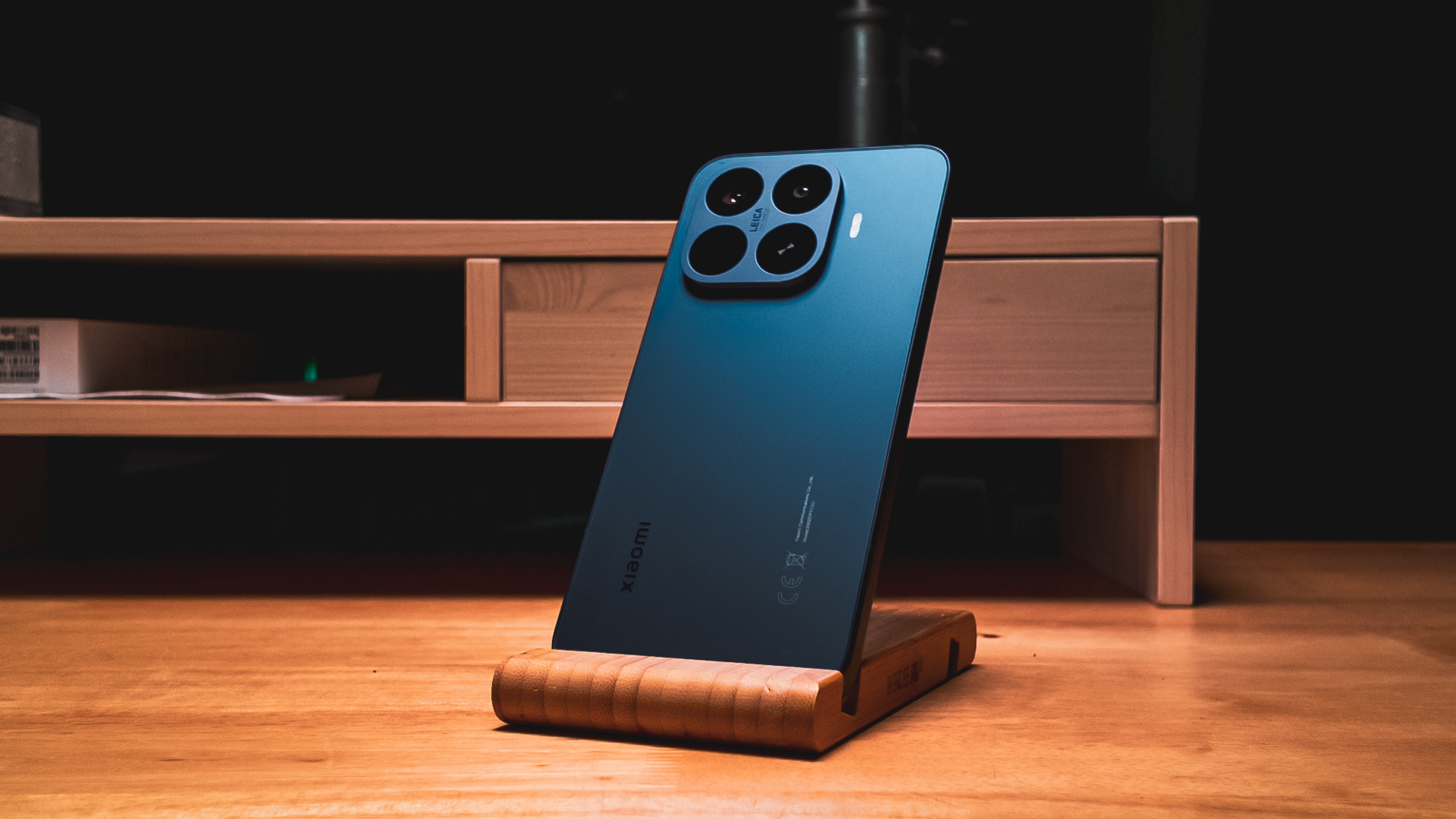
Xiaomi’s T series has traditionally been the brand’s mid cycle refresh, a way to bring flagship adjacent hardware to a broader audience between numbered flagship launches. The 17T Pro, however, looks like it’s throwing that playbook out the window. With a Dimensity 9500 chipset, a Leica tuned triple camera system with a periscope telephoto, a 7000mAh battery, and a 144Hz AMOLED panel, this feels less like a “T” phone and more like a numbered flagship wearing a different badge. Here’s how it shapes up as Xiaomi has sent us their Deep Blue 17T Pro(12GB + 512GB) and their vanilla variant Opal White 17T(12GB + 512GB).

Specifications
| Dimensions | 157.6 x 75.2 x 8.2 mm |
| Weight | 200 g |
| Display Type | AMOLED |
| Display Size | 6.83 Inches |
| OS | Android 16, HyperOS 3 |
| Chipset | Mediatek Dimensity 9500 |
| Memory | 256GB 12GB RAM, 512GB 12GB RAM, 1TB 12GB RAM |
| Rear Camera | 50 MP, f/1.7, 23mm (wide), 1/1.31″, OIS
50 MP, f/3.0, 115mm (periscope telephoto), 1/2.76″, OIS, 5x optical zoom 12 MP, f/2.2, 15mm, 120˚ (ultrawide), 1/3.06″ |
| Front Camera | 32 MP, f/2.2, 21mm (wide), 1/3.42″ |
| Speakers | Stereo Speakers |
| Battery Type | 7000 mAh Silicon Carbon |
| Charging Speed | 100W Wired 22.5W Reverse Wired 50W Wireless |
Unboxing


The device comes in a fairly generous offering, something which has been a staple from Xiaomi themselves. You get a protective silicon case, a 100W charger, sim ejector tool, and some paperworks.
Design and Build


The 17T Pro sticks to a familiar but sturdy formula: a Gorilla Glass front, an aluminum frame, and a glass fiber reinforced plastic back. Xiaomi is touting the frame’s rigidity numbers (330 N/mm for the frame, 321 N/mm for the whole device) built around an aluminium alloy, the kind of spec sheet flex that suggests durability was a design priority.
It’s rated IP68 for dust and water resistance, immersible up to 3 meters for 30 minutes, though notably it appears to carry only that single rating rather than the dual IP68/IP69 pairing some rivals now offer at this price point. The phone comes in three colorways ; Black, Deep Violet, and Deep Blue.
Connectivity wise, there’s a mixed bag of modern and dated: an infrared blaster survives (handy for controlling home appliances), but the USB port is still Type C 2.0 rather than a faster 3.x standard, a curious omission on a phone pushing RM3199, and one that’s already drawing criticism from prospective buyers.
Display

This is an element where the 17T Pro throws its weight around. The 6.83 inch AMOLED panel runs at a sharp 1280 x 2772 resolution (~447 ppi) and a smooth 144Hz refresh rate, backed by a 3840Hz PWM dimming frequency that should be a welcome relief for anyone sensitive to screen flicker at low brightness. Throw in Dolby Vision and HDR10+ support, and this is shaping up to be one of the more capable screens in its class, genuinely flagship tier rather than a T series concession.
Performance

Under the hood sits MediaTek’s Dimensity 9500, built on a 3nm process with an octa core CPU arrangement (1×4.21GHz C1 Ultra, 3×3.5GHz C1 Premium, 4×2.7GHz C1 Pro) and a Mali G1 Ultra MC12 GPU. This is currently one of MediaTek’s most capable mobile chipsets, and paired with 12GB of RAM across both the 512GB and 1TB storage configurations (UFS 4.1), the 17T Pro should handle everything from multitasking to demanding games without breaking a sweat.
Software runs on Android 16 with HyperOS 3 layered on top, Xiaomi’s latest software iteration, which should bring updated AI features and continued refinement of MIUI’s successor.
Cameras

The camera setup is where Xiaomi leans hardest into “flagship” territory, with Leica branded optics across a triple camera array:
- Main: 50MP, f/1.6, 23mm wide, large 1/1.31″ sensor, 1.2µm pixels, multi directional PDAF, OIS
- Telephoto: 50MP, f/3.0, 115mm periscope lens, 1/2.76″ sensor, 5x optical zoom, OIS
- Ultrawide: 12MP, f/2.2, 15mm, 120° field of view, 1/3.06″ sensor
The periscope telephoto is the standout here, a genuine 5x optical zoom is still a differentiator even among premium phones, and pairing it with OIS should help keep shots stable at range. The main sensor’s size (1/1.31″) is also notably large but not the largest for the class, promising strong low light performance.
Video capability tops out at 8K@30fps, with 4K available up to 120fps and a specialty 1080p slow motion mode reaching 960fps. Support for 10 bit Rec. 2020 color and HDR10+ recording rounds out a genuinely capable video package.
On the front, a 32MP selfie camera (f/2.2, 21mm) handles video up to 4K@30fps.
One caveat worth noting: only two of the three rear cameras (main and telephoto) sport genuinely “premium” specs, the ultrawide’s smaller sensor and simpler feature set draws comparisons with the previous generation 15T, where the new 17T edges out just slightly better in low light photography. However, this is a long shot when you compare it to other flagship devices in the same price range.
Camera Samples
Photography


Videography

Battery and Charging

A 7000mAh silicon carbon battery is a massive capacity for a phone this size, and it’s paired with fast 100W wired charging (PD3.0, QC4) and a still quick 50W wireless charging. Battery anxiety should be a non issue here, this is one of the largest capacities on the market right now, silicon carbon cell chemistry allowing Xiaomi to pack it in without a dramatic size or weight penalty.
Audio and Extras
Stereo speakers with Dolby Atmos tuning and support for 24 bit/192kHz Hi Res audio (wired and wireless) suggest Xiaomi hasn’t neglected multimedia. There’s no 3.5mm headphone jack, unsurprisingly. Biometrics come via an in display optical fingerprint sensor, functional, though not the fastest ultrasonic technology found on some rival flagships, and another point early commentators have raised as underwhelming for the asking price.
Connectivity extends to Wi Fi 7, Bluetooth 6.0, and comprehensive satellite positioning support, about as thorough a positioning suite as you’ll find on any phone today.
Early owner feedback since launch has been largely positive on design and the Dimensity 9500’s performance, though a few recurring complaints have surfaced: some buyers describe the stereo speakers as underwhelming for the price bracket, others note screen brightness feels lower than expected outdoors, and HyperOS 3’s bundle of pre installed apps has drawn the usual round of bloatware grumbling.
Verdict

The Xiaomi 17T Pro reads like a phone that refuses to play the “budget flagship” role its T series lineage suggests. A top tier Dimensity 9500 chipset, a genuinely excellent display, a Leica tuned camera system with real periscope zoom, and a massive 7000mAh battery with fast charging all point toward serious flagship ambitions.
But at RM3199 (and RM3499 for the 1TB model), it’s competing directly with numbered flagships from Xiaomi itself and its rivals, and a few choices feel oddly conservative for that bracket: USB 2.0 speeds, a single IP rating rather than a dual certification, an optical (not ultrasonic) fingerprint reader, and an ultrawide camera that doesn’t quite match its siblings. Early owner complaints about speaker loudness and outdoor screen brightness add a couple more asterisks. None of these are dealbreakers individually, but together they’re the kind of nitpicks that stand out more sharply once the price crosses four figures.
At its confirmed price, the 17T Pro is a phone with genuine flagship muscle, top tier chipset, standout display, excellent zoom camera, huge battery, held back from being an easy top pick by a handful of corner cutting decisions that feel more “mid range hangover” than “sub flagship.” For buyers prioritizing performance, screen quality, and battery life over the fastest port or the flashiest fingerprint tech, it’s still a strong contender in its price class.